- Website Packages StarterPack 1£ 500 One-time feeSmall business, startup, or personal project5-page Website DesignMobile-ResponsiveBasic On-Page SEOSocial Media IntegrationContact FormsGoogle Maps IntegrationDelivery in 2 weeksProfessionalPack 2£ 900 One-time feeStrong Online Presence for Businesses10-Page Website DesignMobile-Responsive; SEO-FriendlyAdvanced - Blog, Gallery, ProductsE-Commerce IntegrationSocial Media Integration, Email MarketingContact forms, Google Maps, NewsletterDelivery in 2-4 weeksPremiumPack 3£ 1600 One-time feeComprehensive High-End Website20+ Pages, Advanced FeaturesMobile-Responsive; Advanced SEOE-commerce, ProductsPayment Gateways SetupUpdates & Maintanance (3 months)Social Media Integration, Email MarketingDelivery 4-6 weeks
- SEO Plans Essential PlanLevel 1£ 200 Per MonthIdeal for small businesses and startupsComprehensive Keyword ResearchOn-page SEO OptimizationBasic Backlink BuildingMonthly Performance ReportingAdvanced PlanLevel 2£ 400 Per MonthFor businesses looking to expand their reachEverything in Level 1, plus:Competitor Analysis and StrategyContent Creation and OptimizationLocal SEO optimizationAdvanced Backlink StrategyEnterprise PlanLevel 3£ 800 Per MonthFor large businesses and enterprisesEverything in Level 2, plus:Comprehensive Technical SEO auditE-Commerce SEO optimizationContent Marketing and Link-BuildingMonthly Strategy And Performance Reviews
- Full-Service Packs Complete Online PresencePack 1£ 1250 One-time feeIncludes the Professional Website Package6 months of Tech Support & Hosting3 months of SEO Optimization (Level 1)Discount Available With a Contract For 2-Years SupportBusiness Growth Every DayPack 2£ 2200 One-time feeIncludes the Premium Website Package12 months of Technical Support & Hosting6 months of SEO Optimization (Level 2)Discount Available With a Contract For 2-Years SupportEnterprise Business SuccessPack 3£ 3500 One-time feeIncludes the Premium Website Package12 months of Technical Support & CDN Hosting12 months of SEO Optimization (Level 3)Discount Available With a Contract For 2-Years Support
- Plugins





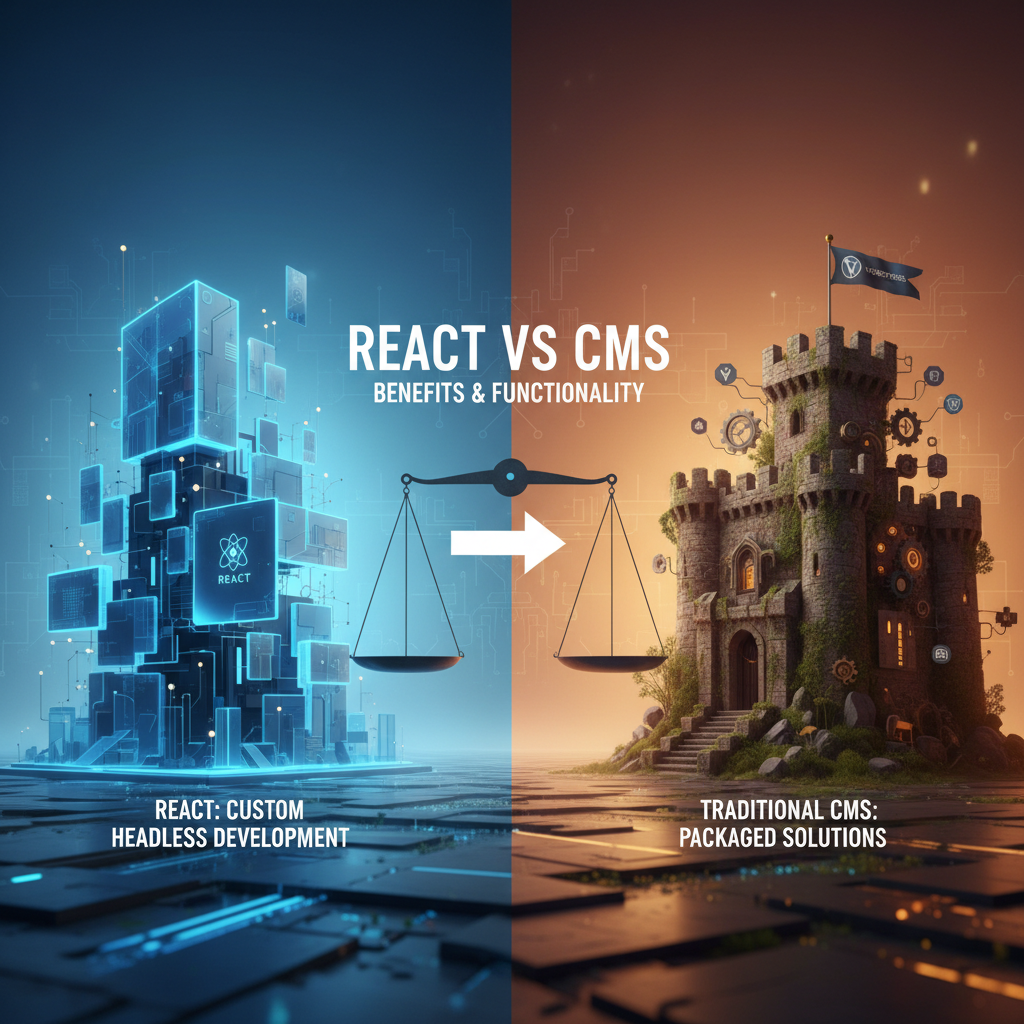
React VS CMS like WordPress: Exploring Benefits and Functionality
This post has been read 95 times.
Introduction
In today’s digital age, content management systems (CMS) and modern front-end frameworks play pivotal roles in web development. Among them, WordPress and React have gained significant popularity. WordPress, a well-established CMS, offers a user-friendly interface for content creation and management, while React, a powerful JavaScript library developed by Facebook, is celebrated for its dynamic user interfaces and efficient rendering. In this article, we’ll delve into the benefits and functionalities of both React and WordPress, helping you decide which platform might be the best fit for your next project.
What is WordPress?
WordPress is an open-source CMS that powers over 40% of the internet. It is known for its ease of use, extensive plugin ecosystem, and robust community support. It allows users—regardless of their technical skills—to create and manage websites effortlessly.
Key Features of WordPress
1. User-Friendly Interface: WordPress’s dashboard is intuitive, making it simple for users to publish and manage content.
2. Themes and Plugins: With thousands of themes and plugins available, users can easily customize their sites without writing any code.
3. SEO Friendly: WordPress is optimized for search engines, offering tools and plugins to enhance your site’s visibility.
4. Community Support: A vast community offers forums, tutorials, and resources to solve any issues.
5. E-commerce Capabilities: With plugins like WooCommerce, WordPress can transform into a full-fledged e-commerce platform.
What is React?
React is a JavaScript library for building user interfaces. It allows developers to create large web applications that can change data dynamically without reloading the page.
Key Features of React
1. Component-Based Architecture: React allows for the development of reusable UI components, streamlining the development process.
2. Virtual DOM: React enhances performance through its virtual DOM that optimizes rendering by only updating parts of the UI that change.
3. Declarative Syntax: Its syntax allows developers to describe what the UI should look like, enhancing readability and reducing bugs.
4. Rich Ecosystem: The React ecosystem includes libraries like React Router for routing and Redux for state management, furthering its capabilities.
5. Strong Community: An active community contributes to a wealth of resources and third-party tools.
Comparative Analysis: Benefits and Functionality
1. Development Speed
- WordPress: Quick to launch thanks to pre-built themes and plugins. Developers can set up a fully functional site in a matter of hours.
- React: Initial setup might take longer due to the requirement for more code, but once the foundation is laid, new features can be developed rapidly using reusable components.
- WordPress: Offers extensive customization options through plugins and themes but can become limited if you require functionalities outside of those offerings.
- React: Provides unparalleled flexibility, allowing for the creation of highly customized solutions tailored to specific business needs. Developers can create unique components and integrate them into the application.
- WordPress: Performance can be affected by the number of plugins and the hosting environment. Optimized themes can significantly enhance speed, but it’s still typically slower than a custom-built React application.
- React: Generally faster due to the virtual DOM and efficient rendering methods, making it suitable for high-performance applications where speed is a priority.
- WordPress: Naturally SEO-friendly with built-in features and plugins like Yoast SEO which make it easy to optimize content for search engines.
- React: SEO can be challenging since it is client-side rendered by default. However, solutions like Next.js enable server-side rendering, which can address these concerns.
- WordPress: While WordPress can handle a significant amount of content and traffic, it may require more management and optimization efforts as the site grows.
- React: Highly scalable, making it suitable for large applications and complex projects. It can handle large amounts of user interactions and data with efficiency.
- WordPress: Provides a straightforward experience for end-users, especially when managing content. However, the user experience can vary based on themes and plugins used.
- React: Offers a seamless and interactive user experience. Its component-based architecture enhances UI consistency, resulting in a more cohesive experience.
2. Customizability
3. Performance
4. SEO Capabilities
5. Scalability
6. User Experience
Which One Should You Choose?
Choosing between React and WordPress ultimately depends on your project requirements, team capabilities, and long-term goals.
When to Choose WordPress
1. You need a simple blog or website without complex functionalities.
2. Quick deployment is essential, and you wish to leverage a range of existing themes and plugins.
3. You want an easier learning curve for content contributors who may not have technical backgrounds.
4. Your focus is primarily on content management and SEO optimization.
When to Choose React
1. You are building a high-performance, interactive web application that requires real-time data updates.
2. Customization is a priority, and you want full control over the application architecture.
3. You have technical resources skilled in JavaScript and are prepared for more complex development workflows.
4. Scalability is essential as you anticipate significant traffic growth in the future.
Conclusion
Both React and WordPress offer unique benefits and functionalities suitable for various types of projects. Understanding your specific needs, technical resources, and long-term objectives will guide you in making the right choice for your web development journey. Whether you go with the familiar terrain of WordPress or the innovative landscape of React, each option has the power to create compelling, effective, and manageable web solutions.
As the digital landscape continues to evolve, staying informed about the strengths and weaknesses of these platforms will empower you to create websites that not only meet user expectations but exceed them in performance and experience. Choose wisely, and watch your digital presence flourish.