- Website Packages StarterPack 1£ 500 One-time feeSmall business, startup, or personal project5-page Website DesignMobile-ResponsiveBasic On-Page SEOSocial Media IntegrationContact FormsGoogle Maps IntegrationDelivery in 2 weeksProfessionalPack 2£ 900 One-time feeStrong Online Presence for Businesses10-Page Website DesignMobile-Responsive; SEO-FriendlyAdvanced - Blog, Gallery, ProductsE-Commerce IntegrationSocial Media Integration, Email MarketingContact forms, Google Maps, NewsletterDelivery in 2-4 weeksPremiumPack 3£ 1600 One-time feeComprehensive High-End Website20+ Pages, Advanced FeaturesMobile-Responsive; Advanced SEOE-commerce, ProductsPayment Gateways SetupUpdates & Maintanance (3 months)Social Media Integration, Email MarketingDelivery 4-6 weeks
- SEO Plans Essential PlanLevel 1£ 200 Per MonthIdeal for small businesses and startupsComprehensive Keyword ResearchOn-page SEO OptimizationBasic Backlink BuildingMonthly Performance ReportingAdvanced PlanLevel 2£ 400 Per MonthFor businesses looking to expand their reachEverything in Level 1, plus:Competitor Analysis and StrategyContent Creation and OptimizationLocal SEO optimizationAdvanced Backlink StrategyEnterprise PlanLevel 3£ 800 Per MonthFor large businesses and enterprisesEverything in Level 2, plus:Comprehensive Technical SEO auditE-Commerce SEO optimizationContent Marketing and Link-BuildingMonthly Strategy And Performance Reviews
- Full-Service Packs Complete Online PresencePack 1£ 1250 One-time feeIncludes the Professional Website Package6 months of Tech Support & Hosting3 months of SEO Optimization (Level 1)Discount Available With a Contract For 2-Years SupportBusiness Growth Every DayPack 2£ 2200 One-time feeIncludes the Premium Website Package12 months of Technical Support & Hosting6 months of SEO Optimization (Level 2)Discount Available With a Contract For 2-Years SupportEnterprise Business SuccessPack 3£ 3500 One-time feeIncludes the Premium Website Package12 months of Technical Support & CDN Hosting12 months of SEO Optimization (Level 3)Discount Available With a Contract For 2-Years Support
- Plugins






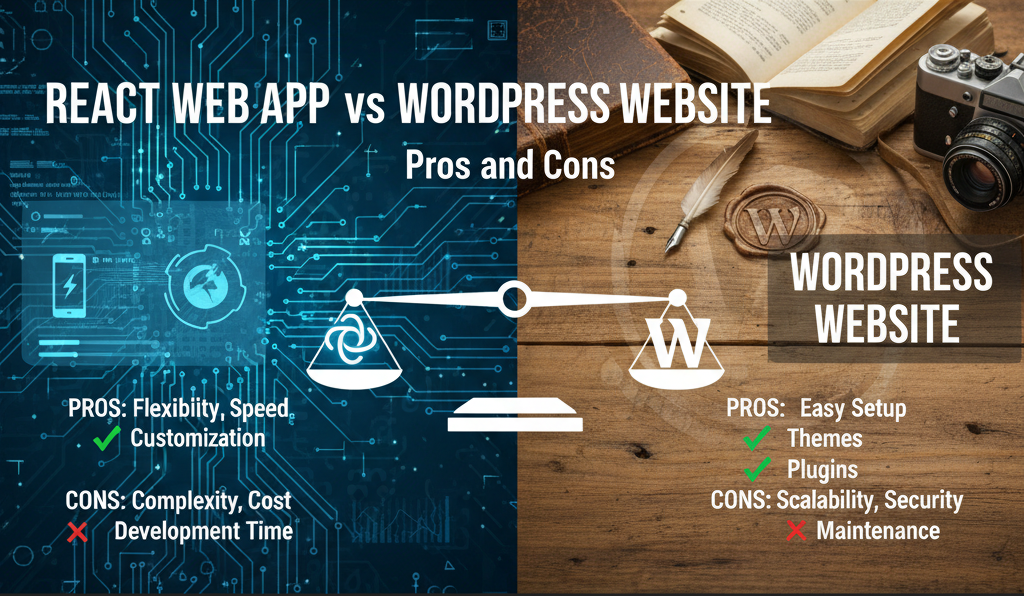
React Web App vs WordPress Website – Pros and Cons
This post has been read 5 times.
Nowadays, businesses face the critical decision of selecting the right platform for their online presence. Two of the most popular choices are React web apps and WordPress websites. Each comes with its own set of advantages and disadvantages, tailored to different business needs. This article aims to explore the pros and cons of both platforms, enabling you to determine what is better for your business.
What is React?
React is a JavaScript library developed by Facebook for building user interfaces, particularly single-page applications. It allows for the creation of dynamic and responsive web applications by efficiently updating and rendering the right components as data changes. React is known for its high performance and ability to handle complex interfaces with ease.
What is WordPress?
WordPress is a content management system (CMS) that enables users to create and manage websites easily. Originally launched as a blogging platform, it has since evolved to support a variety of website types, including e-commerce, portfolios, and corporate sites. With its vast ecosystem of themes and plugins, WordPress offers flexibility and ease of use, appealing to both beginners and seasoned developers.
Pros and Cons of React Web Apps
Pros
1. High Performance
React’s virtual DOM optimizes rendering, significantly improving performance, especially in applications that require frequent updates. This makes it an excellent choice for dynamic web applications where speed is essential.
2. Component-Based Architecture
React’s component-based structure promotes code reuse and maintainability. Developers can build self-contained components that can be reused throughout the application, reducing development time and effort.
3. Rich User Interfaces
React excels at creating rich user interfaces that enhance the user experience. Its ability to efficiently manage state and respond to user interactions makes it ideal for applications requiring advanced UI features.
Cons
1. Steeper Learning Curve
For newcomers, React can be challenging to learn compared to WordPress. Understanding concepts like JSX and the component lifecycle may take time, making it less accessible for non-developers.
2. Development Time
Building a React application from scratch can be time-consuming. While the component-based approach offers flexibility, it also means that developers need to invest more time in creating custom components and functionalities.
3. SEO Challenges
Even though React can be optimized for SEO, it often requires additional strategies, such as server-side rendering. This can complicate the development process and may not be the best choice for businesses heavily reliant on search engine visibility.
Pros and Cons of WordPress Websites
Pros
1. User-Friendly
One of the standout features of WordPress is its user-friendly interface. Even those with minimal technical expertise can easily create and manage content, making it an ideal choice for small businesses.
2. SEO-Friendly
WordPress is inherently SEO-friendly, providing various plugins, such as Yoast SEO, that assist in optimizing your site for search engines. This makes it a strong contender for businesses that prioritize online visibility.
3. Extensive Plugin Ecosystem
The [DRTSWebWorks](https://drtswebworks.com) offers an array of plugins that extend WordPress functionality beyond blogging, allowing for e-commerce, membership sites, and more. This versatility can help businesses scale as they grow.
Cons
1. Performance Issues
While WordPress is easy to use, it can suffer from performance issues if not optimized correctly. Bloated plugins and themes may slow down your website, which could negatively impact user experience.
2. Security Vulnerabilities
Due to its popularity, WordPress is a frequent target for hackers. Businesses must stay vigilant about security updates and choose reputable plugins to protect against vulnerabilities.
3. Less Control Over Customization
Although WordPress offers customization options, you may find some limitations with themes and plugins. Businesses with unique requirements may need extensive modifications, which can be costly and time-consuming.
React vs WordPress: Which is Better for Your Business?
Choosing between React web apps and WordPress websites largely depends on your business needs, goals, and technical capabilities.
When to Choose React
– Complex Applications: If your business needs a highly interactive, data-driven application, React might be the better choice. Its ability to handle dynamic content makes it ideal for applications like dashboards or real-time collaborative tools.
– Focus on User Experience: If enhancing the user experience is a core part of your strategy, React’s superior UI capabilities can provide a competitive edge.
When to Choose WordPress
– Content-Centric Sites: For businesses focusing on content marketing, blogs, or portfolios, WordPress excels at providing a user-friendly experience that allows for quick updates and iterative designs.
– E-commerce Flexibility: If you need a straightforward e-commerce solution, WordPress, through plugins like WooCommerce, can facilitate easy setup without the need for intricate development.
Ultimately, the choice between a React web app and a WordPress website should align with your specific business needs and goals. React offers unparalleled performance for interactive applications, while WordPress provides a user-friendly solution for content-driven websites. For businesses wanting a combination of both worlds, consider engaging in a discussion with a professional web development company like [DRTSWebWorks](https://drtswebworks.com). Their expertise can guide you in selecting the best option for your digital strategy.
Final Thoughts
In the ever-evolving digital landscape, staying ahead of the curve is essential. Understanding the strengths and weaknesses of React and WordPress websites ensures that you can make an informed decision tailored to your business’s objectives.
Whether you opt for the dynamic capabilities of React or the user-friendliness of WordPress, your choice will ultimately define your online presence and user engagement. So weigh your options carefully and choose the platform that positions your business for success!
TAGS: React, WordPress, web applications, website development, business comparison, SEO, user experience, technology, digital marketing, content management