







AI in Healthcare – Applications and Modern Methods
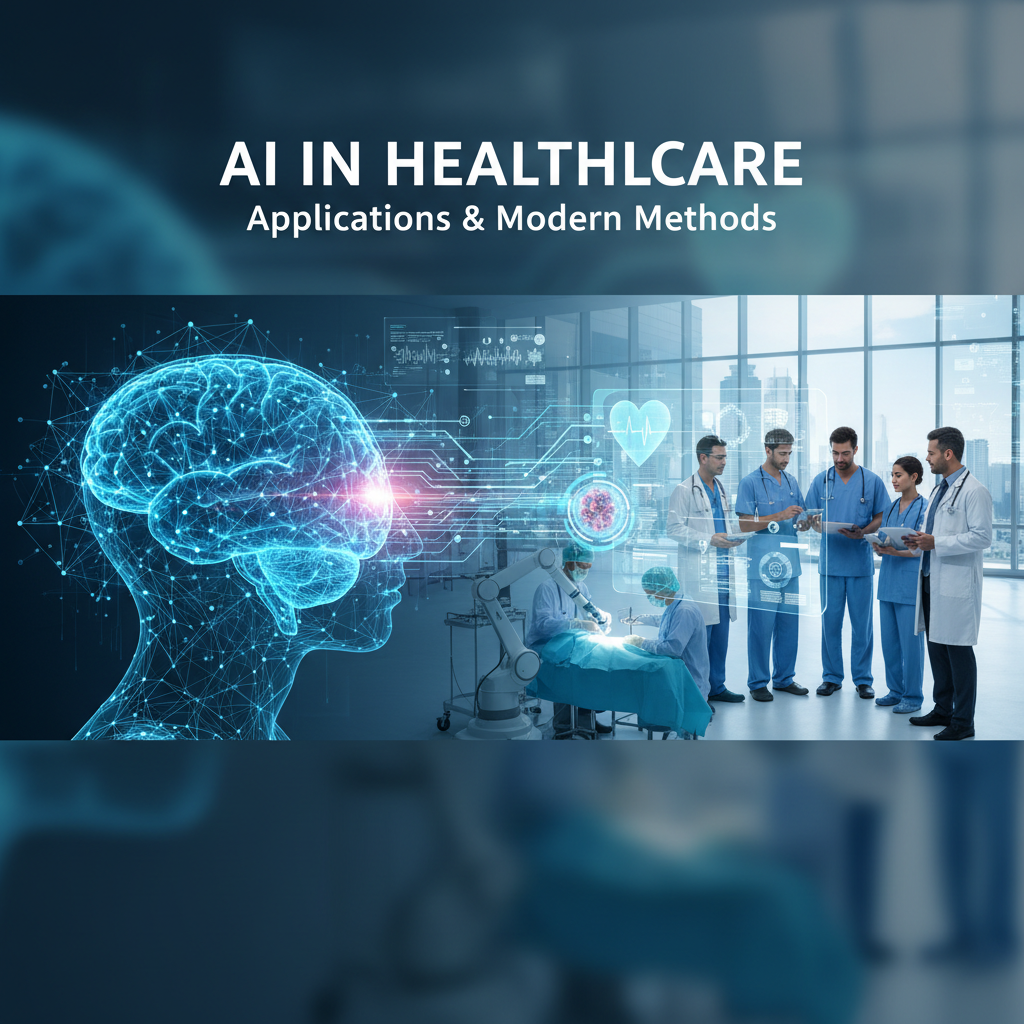
This post has been read 9 times.
Introduction to AI in Healthcare
Artificial Intelligence (AI) is revolutionizing various industries, with healthcare being one of the sectors experiencing the most profound changes. The integration of healthcare AI into medical practices is reshaping the way healthcare professionals deliver services, diagnose conditions, and treat illnesses. From predictive analytics to telemedicine and personalized treatment plans, the applications of AI in healthcare are vast and incredibly beneficial.
Understanding Healthcare AI
Healthcare AI refers to the use of artificial intelligence technologies to improve healthcare outcomes, streamline operations, and enhance patient experiences. These technologies utilize techniques such as machine learning, data mining, and natural language processing to analyze medical data, providing healthcare professionals with insights and augmenting their capabilities.
By learning from vast amounts of data, AI systems can identify patterns and forecasts that assist in decision-making. This can lead to improved patient outcomes and a more efficient healthcare system.
Applications of AI in Healthcare
1. Predictive Analytics
Predictive analytics is one of the most promising applications of AI in healthcare. Machine learning algorithms can analyze historical data to predict future patient outcomes. For example, these algorithms can assess the likelihood of a patient developing a chronic condition based on previous medical histories and lifestyle choices. This early prediction allows healthcare providers to implement preventative measures, significantly reducing healthcare costs and enhancing quality of life.
2. Medical Imaging
AI technologies are making remarkable strides in medical imaging. Deep learning algorithms can accurately analyze X-rays, MRIs, and CT scans, often outperforming human radiologists. By identifying anomalies that may go unnoticed by the human eye, AI enhances diagnostic accuracy, facilitating earlier and more effective treatments. This is critical for conditions such as cancer, where early detection significantly improves prognosis.
3. Telemedicine and Remote Patient Monitoring
Telemedicine has gained immense popularity, especially due to the COVID-19 pandemic. By leveraging AI technologies, telemedicine platforms can enhance virtual consultations. AI-driven chatbots and virtual assistants can manage patient inquiries, triage health concerns, and provide preliminary diagnoses. This not only improves accessibility to healthcare services but also optimizes the healthcare provider’s time.
For effective remote patient monitoring, AI can analyze real-time data from wearable devices, alerting healthcare providers to any concerning trends or abnormalities. This proactive approach enables timely interventions, reducing hospitalizations and enhancing patient outcomes.
4. Drug Discovery and Development
The pharmaceutical industry is a significant beneficiary of AI technologies. Traditional drug discovery processes can be time-consuming and costly. However, AI accelerates this process by identifying potential drug candidates and optimizing the design of clinical trials. By analyzing vast datasets, AI can predict the effectiveness of different compounds, reducing the time it takes to bring a new drug to market.
5. Personalized Medicine
Personalized medicine tailors medical treatment to the individual characteristics of each patient, and AI plays a crucial role in this evolution. By analyzing genetic data alongside other health information, AI can help healthcare providers develop personalized treatment plans. This ensures that patients receive the most effective interventions based on their unique profiles, improving treatment outcomes significantly.
The Role of AI in Enhancing Patient Care
AI positively impacts patient care by enabling more accurate diagnoses, personalized treatment plans, and ensuring patients receive timely interventions. For example, AI-powered applications allow for better medication adherence by sending reminders and providing educational content tailored to specific patient needs. Furthermore, AI algorithms can suggest alternative treatment options based on patient data, fostering a more collaborative approach to healthcare.
Challenges and Considerations
Despite the tremendous potential of AI in healthcare, several challenges must be addressed. Data privacy and security are paramount, as the use of AI often involves handling sensitive patient information. Ensuring compliance with regulations such as HIPAA is critical.
Moreover, the integration of AI into existing healthcare systems requires substantial training for healthcare professionals to ensure they can effectively utilize these tools. The transition also necessitates a cultural shift within healthcare organizations to embrace technology and data-driven practices.
The Future of AI in Healthcare
The future of AI in healthcare looks promising. As technology continues to advance, we can expect even more sophisticated applications of AI that enhance patient care while streamlining operations. Innovations such as health chatbots and AI-assisted robotic surgeries are already in development phases, promising to reshape the patient-provider relationship significantly.
Moreover, as organizations like [DRTSWebWorks](https://drtswebworks.com) facilitate the advancement of healthcare technology, we can anticipate a surge in digital medicine solutions that harness the power of AI to improve overall health outcomes.
Conclusion
AI in healthcare represents a significant leap toward a more efficient, effective, and patient-centered healthcare system. With applications ranging from predictive analytics to telemedicine, healthcare AI is set to transform medical practices and enhance patient care. The ongoing development of AI technologies holds tremendous promise for the future, paving the way for innovations that will remain beneficial for both patients and healthcare providers alike.
Embracing AI in healthcare means better outcomes for patients and a streamlined process for providers. As we continue to navigate the challenges and embrace the opportunities presented by healthcare AI, the potential for a resilient and effective healthcare ecosystem is within reach.