- Website Packages StarterPack 1£ 500 One-time feeSmall business, startup, or personal project5-page Website DesignMobile-ResponsiveBasic On-Page SEOSocial Media IntegrationContact FormsGoogle Maps IntegrationDelivery in 2 weeksProfessionalPack 2£ 900 One-time feeStrong Online Presence for Businesses10-Page Website DesignMobile-Responsive; SEO-FriendlyAdvanced - Blog, Gallery, ProductsE-Commerce IntegrationSocial Media Integration, Email MarketingContact forms, Google Maps, NewsletterDelivery in 2-4 weeksPremiumPack 3£ 1600 One-time feeComprehensive High-End Website20+ Pages, Advanced FeaturesMobile-Responsive; Advanced SEOE-commerce, ProductsPayment Gateways SetupUpdates & Maintanance (3 months)Social Media Integration, Email MarketingDelivery 4-6 weeks
- SEO Plans Essential PlanLevel 1£ 200 Per MonthIdeal for small businesses and startupsComprehensive Keyword ResearchOn-page SEO OptimizationBasic Backlink BuildingMonthly Performance ReportingAdvanced PlanLevel 2£ 400 Per MonthFor businesses looking to expand their reachEverything in Level 1, plus:Competitor Analysis and StrategyContent Creation and OptimizationLocal SEO optimizationAdvanced Backlink StrategyEnterprise PlanLevel 3£ 800 Per MonthFor large businesses and enterprisesEverything in Level 2, plus:Comprehensive Technical SEO auditE-Commerce SEO optimizationContent Marketing and Link-BuildingMonthly Strategy And Performance Reviews
- Full-Service Packs Complete Online PresencePack 1£ 1250 One-time feeIncludes the Professional Website Package6 months of Tech Support & Hosting3 months of SEO Optimization (Level 1)Discount Available With a Contract For 2-Years SupportBusiness Growth Every DayPack 2£ 2200 One-time feeIncludes the Premium Website Package12 months of Technical Support & Hosting6 months of SEO Optimization (Level 2)Discount Available With a Contract For 2-Years SupportEnterprise Business SuccessPack 3£ 3500 One-time feeIncludes the Premium Website Package12 months of Technical Support & CDN Hosting12 months of SEO Optimization (Level 3)Discount Available With a Contract For 2-Years Support
- Plugins





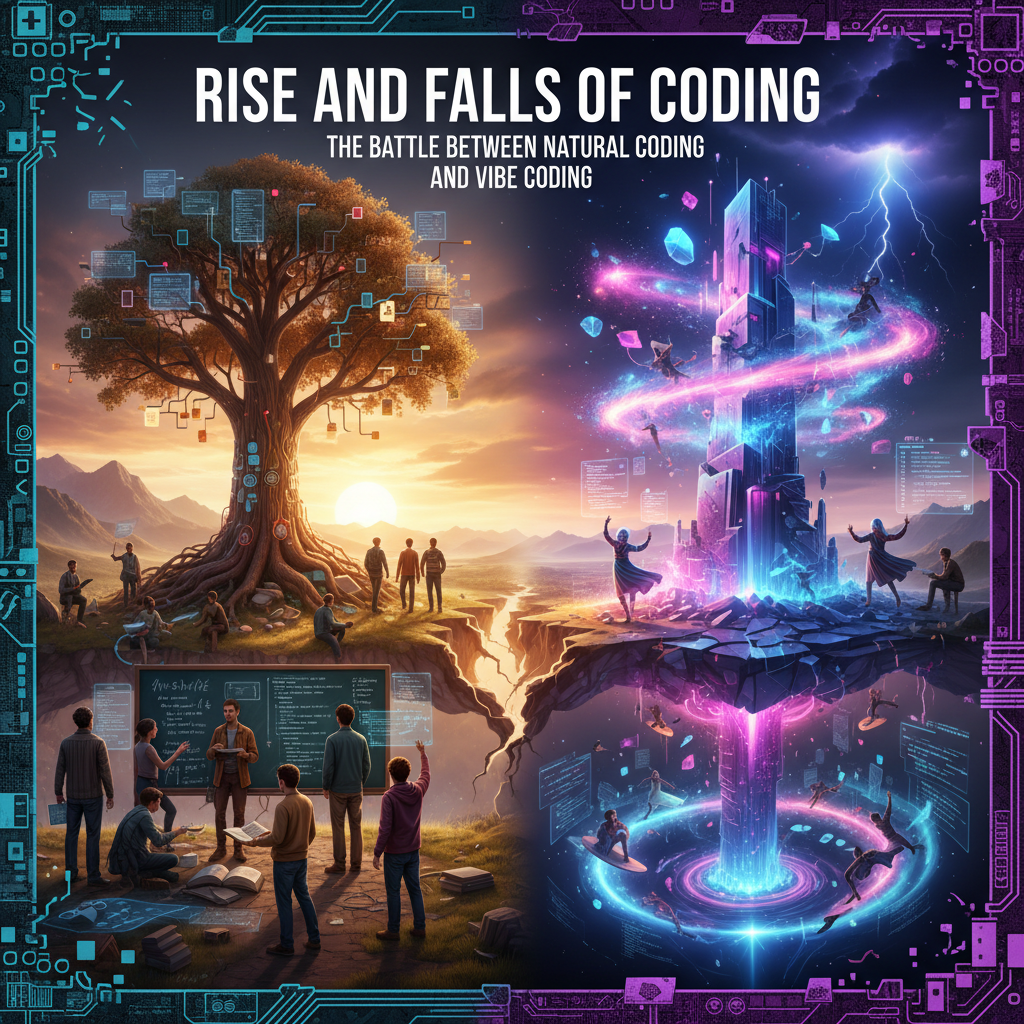
Rise and Falls of Coding – The Battle Between Natural Coding and Vibe Coding
This post has been read 71 times.
In the ever-evolving landscape of software development, coding methodologies are at the forefront of how applications are built and maintained. Among the different approaches, two dominant paradigms have recently emerged: natural coding and vibe coding. Each offers distinct advantages and drawbacks, leading to an ongoing debate in the programmer community. This article will explore the rise and falls of these coding methods, shedding light on their unique characteristics and how they fit into the broader programming landscape.
What Is Natural Coding?
Natural coding, often referred to as pure coding, is a method characterized by robust frameworks and structured programming techniques. It emphasizes writing clean, well-documented code that adheres to best practices and is highly maintainable.
Benefits of Pure Coding
1. Maintainability: Natural coding results in clearer code structures, making it easier for future developers to understand and modify.
2. Scalability: Applications developed with natural coding are built with scalability in mind, allowing them to grow alongside user needs without significant rework.
3. Performance: Pure coding practices often yield more efficient, optimized code, which can enhance performance and reduce load times.
4. Security: By adhering to strict coding standards, developers can better safeguard their applications against vulnerabilities.
5. Community Support: Well-documented coding practices foster a rich community atmosphere, where developers can share insights and help one another.
The Emergence of Vibe Coding
Vibe coding is a more recent paradigm that emphasizes intuition, creativity, and a less structured approach. Rather than following strict programming rules, vibe coding encourages developers to rely on their instincts and “vibe” with the project, often leading to rapid prototyping and spontaneous decisions.
Benefits of Vibe Coding
1. Speed of Development: Vibe coding often allows for quicker iteration and prototyping, enabling teams to get a product to market faster.
2. Creativity and Innovation: This approach encourages developers to think outside the box, leading to innovative solutions that traditional methods could inhibit.
3. Flexibility: By not being bound by rigid rules, vibe coding allows for spontaneity and adaptability to changing project requirements.
4. Reduced Overhead: Since vibe coding relies less on extensive documentation and formal procedures, it can significantly lower the overhead associated with traditional coding methods.
The Battle: Comparing Natural Coding and Vibe Coding
Both coding methodologies have their pros and cons. Below, we will explore the strengths and weaknesses of vibe coding compared to natural coding.
Problems in Vibe Coding
While vibe coding presents a fascinating and appealing approach to development, it also comes with notable challenges:
1. Inconsistency: With less emphasis on structure, vibe coding can lead to inconsistencies in code quality and style, making maintenance a nightmare.
2. Technical Debt: The rush to deliver quickly may accrue technical debt, leading to a scenario where quick fixes are made at the expense of long-term sustainability.
3. Limited Collaboration: Since vibe coding can involve a more individualistic approach, teams may struggle with collaboration, reducing the synergy often found in well-coordinated programming efforts.
4. Debugging Difficulties: The less structured nature of vibe coding can make it more challenging to track down bugs or identify the root causes of issues.
5. Lack of Documentation: In the tradition of vibe coding, developers often skip detailed documentation, which can hinder long-term sustainability and knowledge transfer.
The Falls of Vibe Coding
Though vibe coding flourished during a time of high-speed development and innovation, it has faced its share of setbacks:
– Market Backlash: As software products matured, the market began to demand more robust and maintainable solutions, shifting the focus back to natural coding.
– Increased Complexity: As apps become more complex, vibe coding struggles to provide the structured approach needed to manage that complexity effectively.
– Quality Assurance Challenges: The speed of vibe coding can often sacrifice thorough testing and quality assurance, leading to buggy releases that disappoint users and stakeholders.
The Way Forward: Balancing Both Approaches
While both natural coding and vibe coding have their merits, the future of software development may lie in a blended approach. By leveraging the benefits of both methodologies, developers can create robust, maintainable applications while still fostering an environment conducive to creativity and innovation.
Integrating Natural Coding and Vibe Coding
1. Structured Creativity: Encourage teams to adopt a structured framework for innovation. This means providing guidelines for experimentation while still adhering to coding standards.
2. Iterative Prototyping with Documentation: Use vibe coding to create prototypes rapidly, but ensure that every iteration is well documented to prevent technical debt.
3. Collaboration Culture: Foster a culture that values collaboration between developers working in both paradigms. Establish regular code reviews to ensure consistency and quality across the board.
4. Emphasize Learning and Growth: Promote a growth mindset within teams, where learning from both successes and failures is valued. This approach can lead to continuous improvement in coding practices.
The rise and falls of coding can be traced through the evolution of methodologies like natural coding and vibe coding. Both approaches offer unique sets of benefits and challenges, and understanding these differences is paramount for developers looking to succeed in their projects. As the programming landscape continues to evolve, embracing a hybrid model that combines the strengths of both natural and vibe coding may prove to be the key to developing cutting-edge, sustainable software solutions for the future.
Call to Action
Are you a developer navigating the waters of both natural coding and vibe coding? Share your experiences and thoughts in the comments below! Let’s build a dialogue on how best to approach software development as we move forward in this ever-changing industry.